
Human dignity across borders.
Prioritize diplomacy and human rights, end support for atrocities and invest in humanitarian aid and climate resilience.
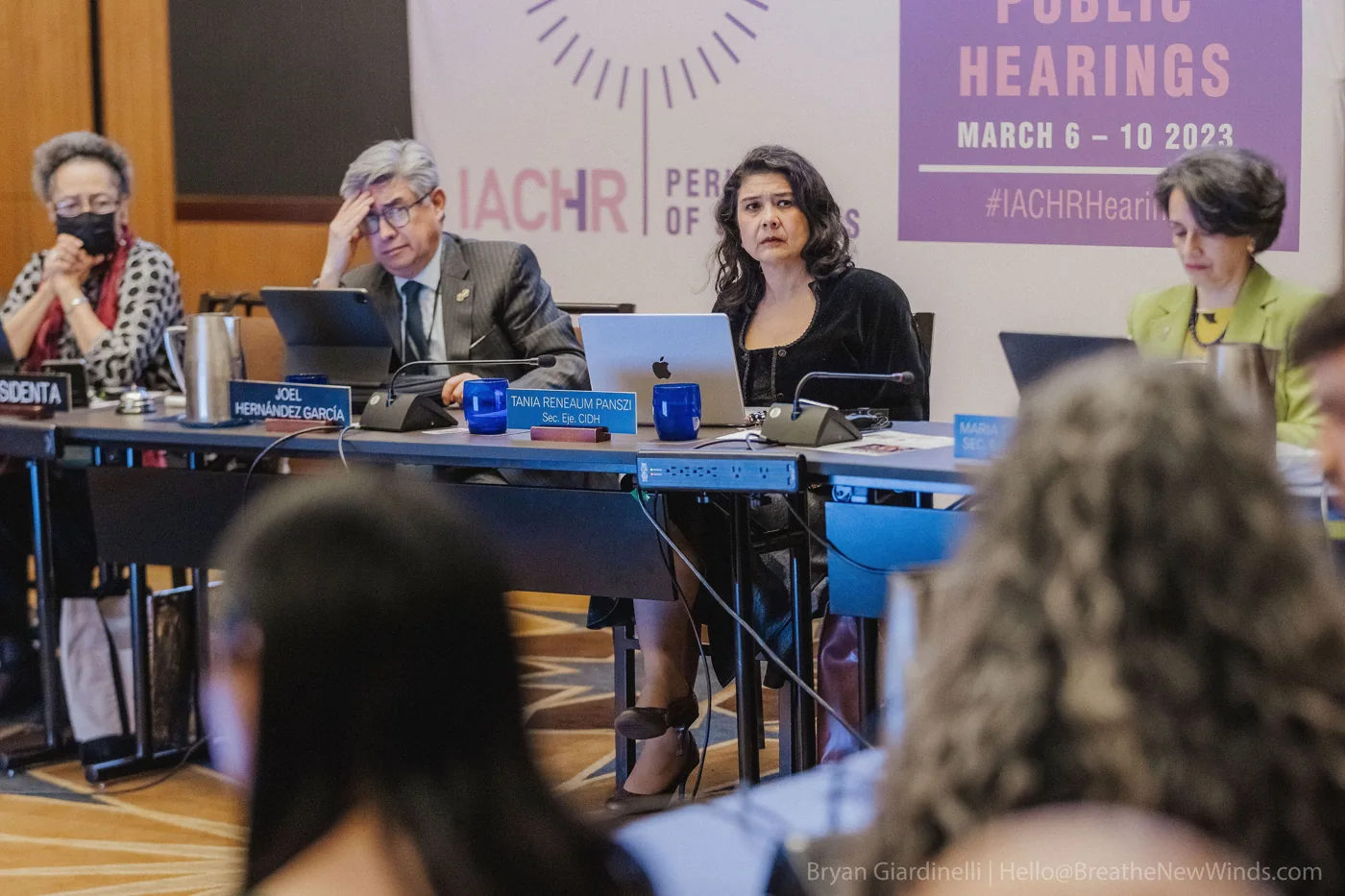
AFP archive · Panelists at public human-rights hearings. No endorsement implied.
Where AFP stands.
Our responsibility to human dignity extends across borders. AFP supports a foreign policy grounded in human rights, international law, diplomacy, and the protection of civilians. The United States should use its resources to prevent conflict, assist people facing catastrophe, and repair harms it has helped cause.
We support national defense and carefully limited, lawful uses of force when necessary to protect people. Military action requires a legitimate purpose, lawful authority, clear limits, civilian protection, and public accountability. We oppose open-ended war, regime-change campaigns, and financial incentives that reward the continuation of conflict.
Palestinian freedom and accountability: AFP recognizes Palestinians’ right to self-determination and freedom from occupation, forced displacement, and collective punishment. AFP’s position is that Israel’s actions in Gaza constitute genocide, an assessment also reached by Amnesty International and the UN Independent International Commission of Inquiry. We call for an end to those acts, an end to U.S. transfers of offensive weapons to Israel, unrestricted humanitarian access, and independent legal accountability for responsible officials, including Benjamin Netanyahu, through fair international proceedings. This is AFP’s stated assessment and policy position; court proceedings and final judgments are distinct matters.
We oppose attacks on civilians, hostage-taking, antisemitism, anti-Palestinian racism, and anti-Muslim hatred. Israeli and Palestinian civilians are entitled to safety, equal human dignity, and a future free from domination and violence. U.S. military assistance everywhere should meet enforceable human-rights conditions, with aid suspended when those conditions are violated.
AFP’s priorities
- Put diplomacy, conflict prevention, negotiated peace, and independent humanitarian assistance at the center of foreign policy.
- End offensive weapons transfers to Israel, oppose occupation and settlement expansion, support Palestinian self-determination, and cooperate with independent international accountability processes.
- Apply human-rights standards consistently to allies and adversaries, including arms transfers, security assistance, and accountability for civilian harm.
- Reduce Pentagon spending on unnecessary weapons, waste, and open-ended deployments; enforce civilian oversight and congressional war powers; and support fair transitions for affected workers.
- Expand civilian-led disaster response, food and medical assistance, refugee protection, reconstruction, public health cooperation, and international climate finance. Use military logistics in support of civilian relief where appropriate.
- Work with other countries on clean energy, resilient infrastructure, environmental restoration, and preparation for climate-driven disasters, with communities receiving assistance helping determine the work.
Sources and legal distinctions
AFP’s assessment is its stated policy position. Investigative findings, criminal allegations, arrest warrants and final court judgments are separate matters.
- Amnesty International’s December 2024 report
- UN Commission of Inquiry’s September 2025 analysis
- International Criminal Court: Netanyahu case information
Source links checked November 17, 2026. Referencing a source does not imply its endorsement of AFP.
Find the people doing the work.
Peace organizations, humanitarian groups, human rights advocacy, veteran-led organizing, refugee support, and international climate justice campaigns.
If we have no listings for your area, try a wider search, explore online options or recommend an organization for us to review.
About this platform
This platform reflects the core convictions of Bryan Giardinelli, director of America For Progress, informed by the broader national progressive movement.
These are AFP’s positions. Organizations in our directory speak for themselves; a listing does not mean they endorse this platform. Archive photographs do not imply endorsement by the people pictured.
These are policy goals and proposals. This page does not describe them as current law or establish eligibility for a public program.